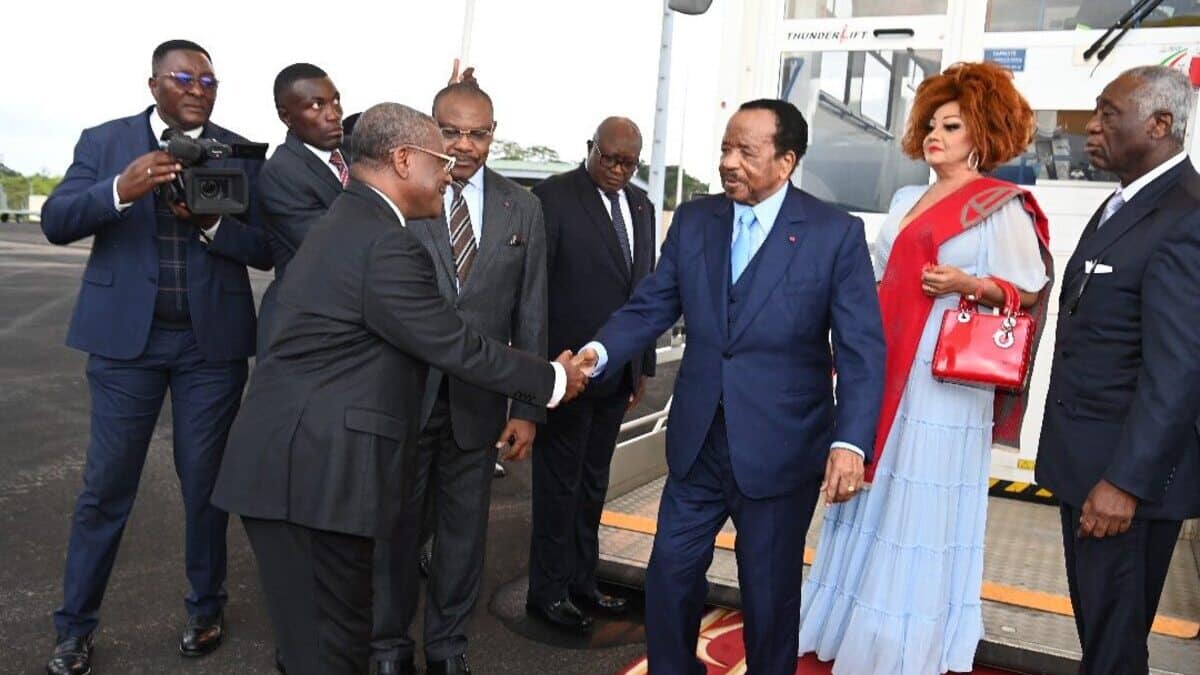

Is the Cameroonian presidency vacant during Paul Biya’s extended trip abroad?
A political editorial aired Monday, July 20, 2026, on Radio Tiémeni Siantou (90.5 FM in Yaoundé and Bafang) examines the implications of President Paul Biya’s prolonged private visit to Europe.
In a political editorial aired Monday, July 20, 2026, on Radio Tiémeni Siantou (90.5 FM in Yaoundé and Bafang), commentator Eric Boniface Tchouakeu questions whether President Paul Biya’s extended private stay in Europe raises concerns about a potential power vacuum in Cameroon.
President Paul Biya left Cameroon on June 7, 2026, for what authorities described as a “short private stay” in Europe, according to a statement from his Cabinet Director, Samuel Mvondo Ayolo.
Reports from reputable panafrican media, including Jeune Afrique, later confirmed the President is indeed in Geneva, Switzerland—his preferred destination since assuming office on November 6, 1982.
The trip, initially described as “short,” has now stretched far beyond expectations, sparking widespread speculation—particularly about the 93-year-old leader’s health. Despite repeated reassurances from officials, rumors persist, with some suggesting a potential power vacuum in Cameroon.
When can a power vacuum be declared in Cameroon?
Contrary to popular belief, the Cameroonian constitution does not tie the concept of a power vacuum to the number of days a president spends abroad. The legal framework does not impose a maximum duration for foreign trips.
A power vacuum in Cameroon can only be declared under three strictly defined circumstances: the president’s death, resignation, or a definitive impediment. However, the constitution provides no clear definition of what constitutes a “definitive impediment,” leaving room for interpretation.
Thus, the prolonged absence of the Head of State from Cameroonian soil cannot, in itself, justify claims of a power vacuum.
Legal loopholes and political ethics
From a legal standpoint, President Biya could theoretically reside abroad and govern Cameroon remotely throughout his term without violating any laws. The real issue lies in political ethics and public perception.
The delayed formation of the government following the October 12, 2025 presidential election—and the swift reintroduction of the Vice-President position—may explain why some observers are now tracking the number of days the President has spent outside Cameroon since June 7, 2026.
In over 43 years in power, President Biya has never signed or issued a major decree from abroad, raising questions about his ability—or willingness—to govern remotely.
Be the first to comment


Comments