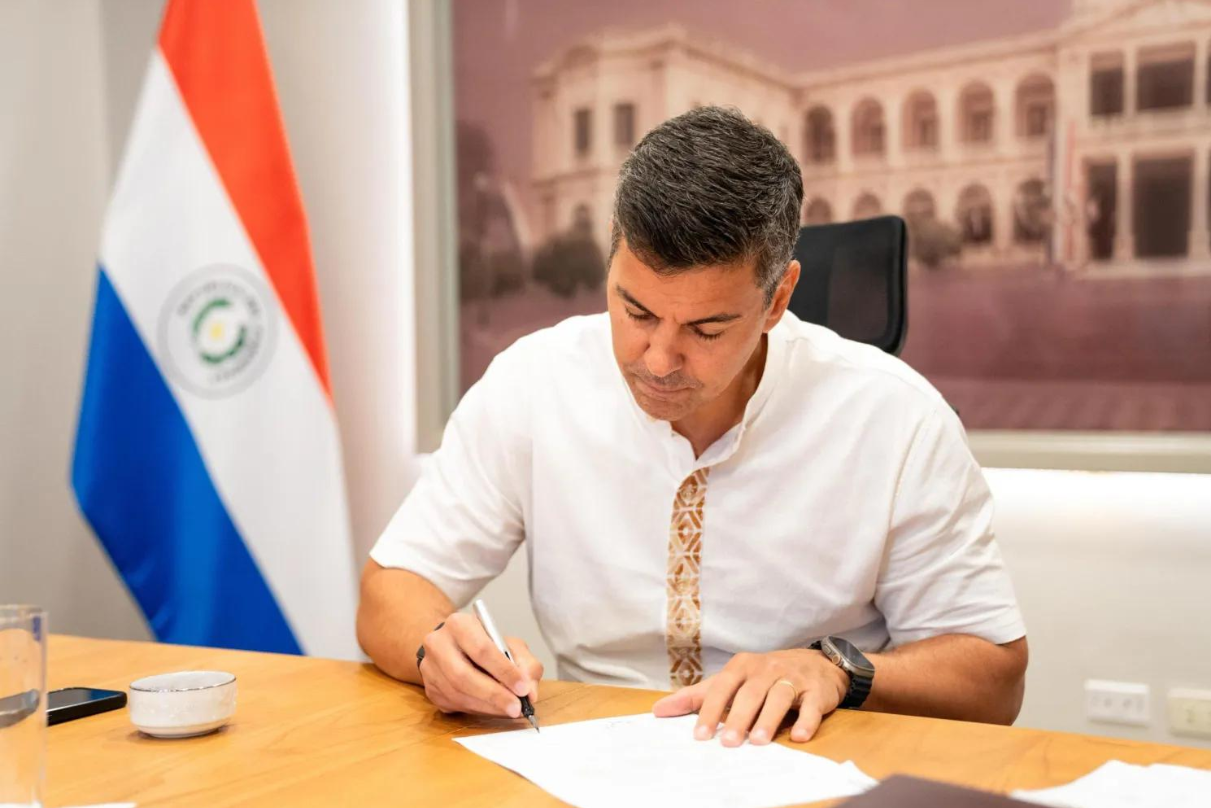

Asunción, Paraguay — Behind the dramatic resignation of President Santiago Peña lies a web of financial mismanagement, political infighting, and systemic weaknesses in Paraguay’s banking oversight. The collapse of Ueno Bank, once the country’s third-largest financial institution, has not only erased billions in savings but exposed deep-rooted flaws in governance and regulatory oversight. As depositors protest and lawmakers move to impeach, the question remains: Was Peña’s resignation a necessary sacrifice for stability—or a capitulation to persistent corruption?
The Ueno Bank disaster: a crisis decades in the making
The downfall of Ueno Bank wasn’t sudden—it was the culmination of years of weak regulation, risky lending practices, and questionable ties between political leaders and financial elites. With over 3 million customers in a nation of 6 million, the bank’s reach was vast, extending beyond personal savings to public pensions and social security funds. When Paraguay’s Central Bank intervened in early November 2026, citing solvency risks below 50%, the move sent shockwaves through the economy.
Not only were depositors locked out of their accounts, but critical public funds—estimated in the hundreds of millions of dollars—were frozen, leaving retirees, civil servants, and small businesses in financial limbo. The intervention revealed a harsh truth: Ueno Bank’s collapse wasn’t an isolated incident, but a symptom of a broader systemic failure in Paraguay’s financial governance.
From boardrooms to the presidential palace: the shadow of conflicted influence
At the heart of the scandal are long-standing questions about Santiago Peña’s past financial ties. Before assuming office, the president held shares in the conglomerate that controlled Ueno Bank. Though he sold his stake in 2025, critics argue the decision was made too late—and under too much political pressure—to erase suspicions of influence-peddling. His alleged failure to act on earlier warnings about the bank’s precarious financial health has fueled accusations of negligence and favoritism toward private interests over public trust.
The crisis also claimed another high-profile casualty: Carlos Carvallo, the Central Bank’s former governor and a former Ueno Bank executive. His appointment and subsequent resignation have raised serious doubts about the independence of financial regulators and whether the Central Bank was complicit in allowing risky practices to persist.
Political erosion: when party loyalty collapses
The president’s resignation came just hours after Paraguay’s lower house initiated impeachment proceedings against him and Vice President Pedro Alliana. The move was not spontaneous. In a stunning blow, several key members of the ruling Colorado Party withdrew their support, signaling a loss of confidence not only in Peña’s leadership but in the party’s ability to govern.
When the Chamber of Deputies voted to impeach Peña on Thursday, the outcome reflected more than legal judgment—it was a verdict on a presidency consumed by scandal. The Senate is now tasked with reviewing the charges, but the damage to institutional credibility has already been done.
Pedro Alliana inherits a national powder keg
As the vice president prepares to assume the presidency, he faces an unprecedented challenge: restoring public faith in Paraguay’s financial system, ensuring depositors regain access to their savings, and uncovering the full extent of Ueno Bank’s malpractice. The government has pledged rapid refunds and launched judicial inquiries into bank executives, but trust eroded by years of mismanagement cannot be restored overnight.
More fundamentally, the crisis forces a reckoning: How did a country once hailed as a model of economic stability in Latin America allow such a catastrophic failure to occur? Was Ueno Bank’s collapse an inevitable result of systemic oversight gaps—or was it preventable, buried under layers of political compromise and weak enforcement?
The ripple effect: rebuilding beyond the ruins
For Santiago Peña, resignation marks the end of a presidency overshadowed by scandal. For Paraguay, it signals the start of a fragile transition. The new leadership must not only address the immediate financial fallout but also implement structural reforms to prevent future crises. This includes strengthening banking oversight, enforcing transparency in financial dealings between government and private sector, and restoring accountability at the highest levels of power.
One certainty remains: the collapse of Ueno Bank has not only reshaped Paraguay’s political landscape—it has exposed the fragility of trust in its institutions. Whether this moment becomes a turning point for renewal or a slide into deeper instability will depend on the choices made in the coming months.