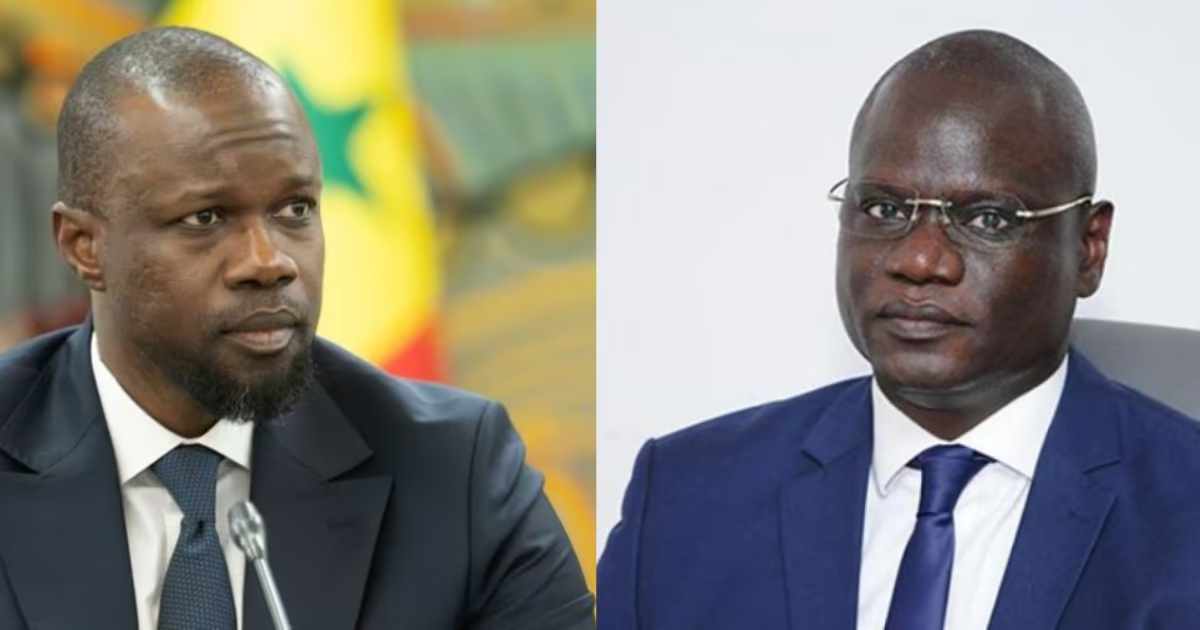
Six parliamentary inquiry commissions are on the agenda for the extraordinary session of the National Assembly, convened this Monday, August 10, 2026. Among them, one stands out for its potential implications: an investigation into financial irregularities in the procurement and execution of contracts under the ‘One Student, One Laptop’ program. Managed by the Ministry of Higher Education, Research, and Innovation (MESRI) since 2017, the program’s cumulative financial commitment amounts to approximately 48 billion West African CFA francs. But is this commission, as some suggest, a veiled attempt to target former minister Abdourahmane Diouf?
A long-running controversy
This issue predates the current administration. As early as November 8, 2025, then-Prime Minister Ousmane Sonko publicly highlighted financial irregularities in higher education programs, including those managed under Abdourahmane Diouf’s tenure. Diouf, in response, called for a parliamentary inquiry to clarify the situation, particularly regarding the construction of five university campuses, while acknowledging shared responsibility with the Prime Minister at the time.
The inquiry commission’s scope spans nearly a decade, from 2017 to 2026, covering the terms of multiple ministers and senior officials at MESRI. While the official decree does not explicitly name Abdourahmane Diouf, the timing of his departure from the presidential coalition—joining the new party Kiiraay – Les Patriotes républicains—has fueled speculation about political motivations behind the inquiry.
Political tensions cast a shadow
The inquiry unfolds against a backdrop of strained relations between Ousmane Sonko and Abdourahmane Diouf. Diouf, a former leader of the Awalé party and erstwhile ally of the ruling coalition, switched allegiances to President Bassirou Diomaye Faye’s newly formed party, marking a definitive break with Sonko’s movement. This political realignment has led some observers to question whether the inquiry is a retaliatory move rather than a genuine effort to address administrative failings.
The official decree establishing the session does not single out any individual, instead framing the inquiry as a broad assessment of the program’s management across multiple administrations. Without concrete evidence, it remains unclear whether Sonko is specifically targeting Diouf through this parliamentary process. Only the findings of the commission, once completed, will reveal the full extent of administrative lapses and individual responsibilities in the program’s 48 billion CFA franc expenditure.