
The roots of Nigeria’s unregulated oil economy exposed in Ogun State
Behind the bustling markets and oil pipelines of Nigeria lies a shadow industry feeding on the country’s precious hydrocarbons. In Ogun State, southwest Nigeria, the unearthing of a clandestine refinery operated under suspicious circumstances has peeled back the layers of an illicit fuel trade that stretches far beyond simple illegal operations. Authorities’ discovery of this hidden facility—alleged to be run by foreign operators—has not only exposed the depth of Nigeria’s regulatory gaps but also raised pressing questions about who truly controls the nation’s oil wealth.
How a secret refinery in Ogun State became a symbol of Nigeria’s oil sector vulnerabilities
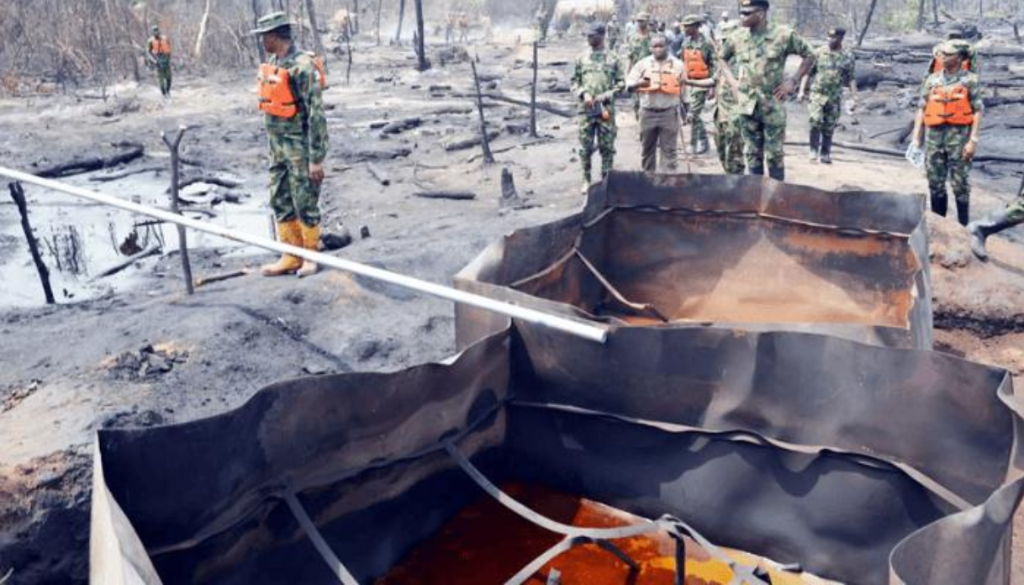
Located in the Ogere region of Ogun State, this large-scale illegal facility was brought to light recently following a targeted operation. The operation uncovered industrial-grade equipment—underground storage tanks, heating systems, separation units, and cooling installations—capable of processing thousands of liters of petroleum byproducts into diesel, known locally as AGO. Despite its scale, no operators were found on-site, emphasizing the clandestine nature of the operation.
The refinery’s infrastructure included a tank with an estimated capacity of 90,000 liters, pointing to a well-structured and potentially long-running system. Investigators revealed that the raw material—black sludge, a residual byproduct from oil refining—was being transported from distant hubs such as Warri in Delta State and Port Harcourt in Rivers State, over hundreds of kilometers. This logistical network suggests the involvement of multiple actors and raises critical questions about the supply chain and financial backers behind such operations.
The invisible supply chain: who fuels Nigeria’s illegal oil trade?
The discovery of this clandestine refinery forces a closer look at the hidden logistics that sustain Nigeria’s illegal fuel economy. The transport of black sludge from oil-rich regions to distant processing sites, coupled with the transformation into marketable diesel, requires a coordinated network of suppliers, transporters, and distributors—all operating outside legal oversight.
Investigators are now probing several key areas:
- The origins of the raw materials and how they were procured;
- The financial backers behind the acquisition of industrial equipment and site setup;
- The buyers of the final product and their potential connections to local markets.
While the investigation continues, the complexity of this network underscores the need to examine not only the immediate operators but also the broader ecosystem of enablers—including middlemen, local facilitators, and possibly institutional complicity.
Environmental and economic toll: why illegal refining is more than a crime
The consequences of unregulated fuel processing go far beyond the immediate violation of the law. Environmental degradation is a major concern: artisanal refining releases toxic fumes, pollutes soil and groundwater, and exposes nearby communities to dangerous chemicals. The absence of proper safety measures increases risks of fires, explosions, and long-term health hazards among residents.
Economically, Nigeria loses millions in uncollected taxes and royalties each year due to illegal refining. Legitimate businesses are undercut by cheaper, unregulated fuel, distorting the market and discouraging investment in compliant enterprises. The lack of quality control means diesel produced in these facilities can damage vehicles and machinery, posing further risks to consumers and industries alike.
The environmental and economic fallout from this clandestine industry highlights a stark reality: illicit refining doesn’t just bypass the law—it undermines Nigeria’s development, public health, and energy security.
China’s role in Nigeria’s oil sector under scrutiny once again
This incident adds to growing scrutiny over the involvement of foreign operators in Nigeria’s oil and gas sector—particularly those from China, which maintains strong economic ties across Africa. While the discovery has been linked to Chinese nationals, it is essential to differentiate between individual actors and broader geopolitical or corporate policies. There is no evidence at this stage to suggest direct involvement by the Chinese government or state-backed enterprises in this specific operation.
Nonetheless, the case serves as a reminder of the need for robust regulatory frameworks to monitor foreign economic activities in Nigeria. Ensuring that all players—regardless of nationality—operate within the law is not just a matter of fairness; it is a pillar of national sovereignty.
The bigger picture: Nigeria’s struggle for control over its oil wealth
This clandestine refinery is more than an isolated law enforcement success—it is a symptom of a deeper challenge: Nigeria’s persistent difficulty in asserting full control over its most valuable natural resource. Despite being Africa’s largest oil producer, the country continues to grapple with pipeline vandalism, artisanal refining, and systemic corruption that divert wealth away from official channels.
For regulators, the task ahead is clear: trace the financial flows, dismantle the entire network, and hold all responsible parties accountable. This case is a test of Nigeria’s ability to protect its natural resources, enforce its laws, and secure its economic future. If left unchecked, such clandestine operations will continue to erode trust in the state’s authority and undermine the foundations of its energy sector.
In Ogun State and beyond, the unmasking of this illegal refinery serves as a wake-up call—not just to the Nigerian government, but to all stakeholders in the energy value chain. True sovereignty over oil begins with ending impunity. Only then can Nigeria fully harness its resources for development.