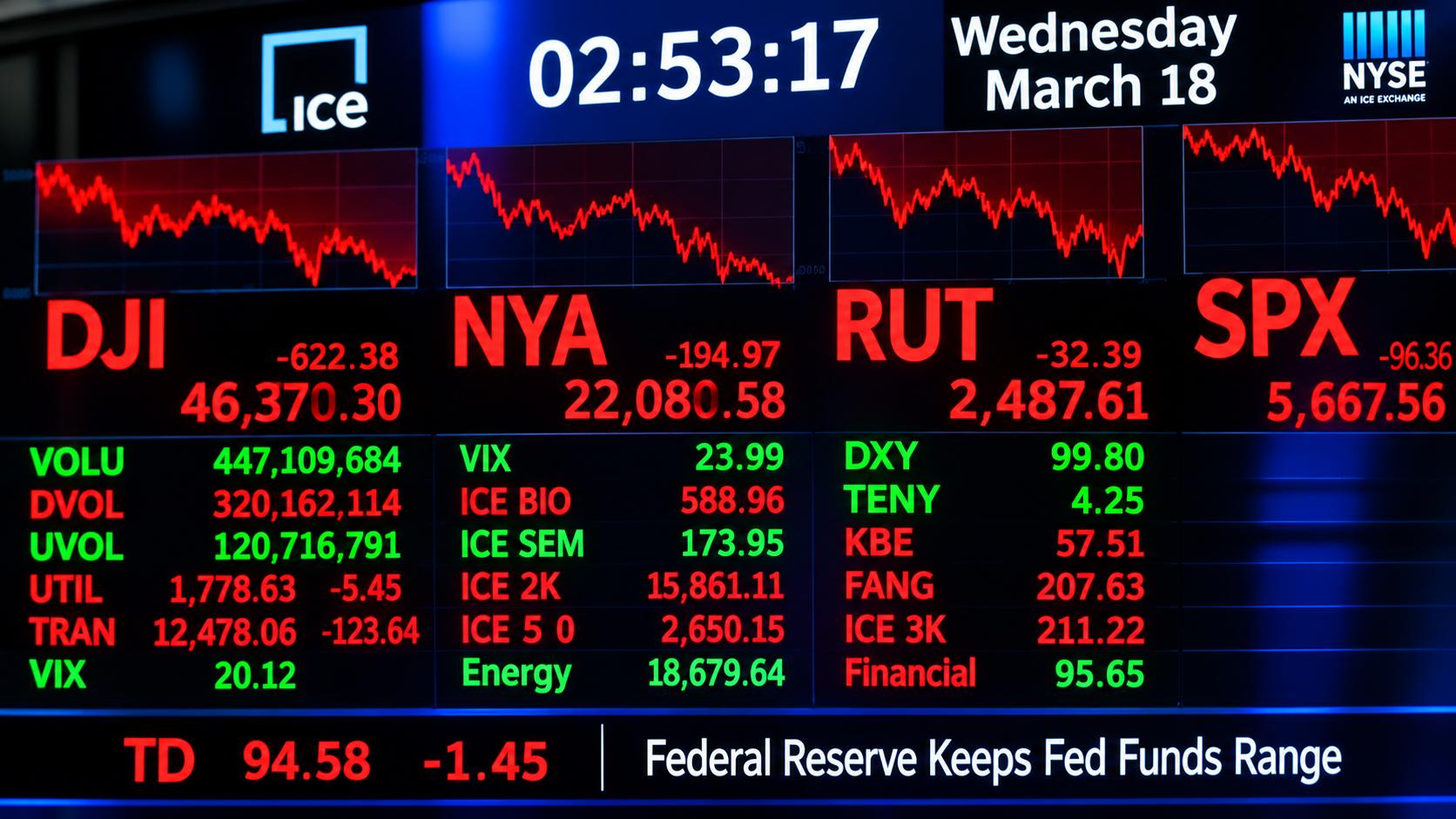

Wall Street just experienced one of the most violent market upheavals in recent years — a sell-off so severe it erased over $2.5 trillion in market capitalization from technology and semiconductor stocks in a single trading session. Behind the chaos lies a convergence of structural weaknesses in the artificial intelligence boom that investors had long taken for granted.
AI’s growth engine hits an air pocket: what went wrong with the chip giants
The spotlight landed squarely on the stocks driving Wall Street’s decade-long rally. But on that day, even the titans of AI couldn’t stand in the storm.
- Nvidia, the undisputed engine of the AI surge, saw its shares tumble between 6 % and 9 % in a matter of hours, vaporizing tens of billions in market value. The drop signaled investors are rethinking whether the company’s sky-high valuation — fueled by aggressive GPU demand — can be sustained if growth slows.
- AMD and Broadcom followed with steep declines, falling between 6 % and 17 %, as doubts spread over their exposure to AI infrastructure and long-term profitability.
- The memory and storage sector bore the brunt of the rout: Micron Technology dropped between 10 % and 17 %, Western Digital lost up to 13 %, and SanDisk fell between 15 % and 22 % — all reflecting a rapid pullback from data center supply chains.
The Philadelphia Semiconductor Index (SOX), a bellwether for chip stocks, plunged over 12 %, wiping out nearly all gains accumulated over the past several months.
A market-wide correction fueled by fear and fundamentals
The rout wasn’t limited to tech. The selling pressure cascaded across the entire U.S. market, dragging major indices deep into negative territory:
- Nasdaq Composite: Lead by tech heavyweights, the index plummeted, wiping out months of gains in minutes.
- S&P 500: Shed more than 2.6 % to 4.3 %, marking its worst trading day of the year.
- Dow Jones Industrial Average: Fell over 3 %, dragged down by both industrial and tech components.
- Cboe Volatility Index (VIX): Surged 33 % — soaring past 60 — a clear sign of panic and elevated risk aversion among portfolio managers.
Three hidden triggers behind the meltdown
What ignited this unprecedented sell-off wasn’t a single event, but a perfect storm of converging concerns:
- Questioning the ROI of AI investments: After pouring hundreds of billions into AI infrastructure, data centers, and energy-hungry servers, investors are now asking whether the financial returns are materializing fast enough to justify current valuations. The disconnect between investment and realized profit has triggered a sharp reassessment of risk.
- Regulatory uncertainty over data center expansion: New policy debates in Washington have raised the specter of stricter controls on data center construction — driven by energy consumption, grid reliability, and environmental concerns. Such a shift could throttle future demand for high-performance chips, casting a shadow over growth projections.
- Automated profit-taking and mass liquidations: After months of relentless gains, algorithmic trading systems and hedge funds triggered sell orders at key technical levels — most notably breaching 200-day moving averages. Once triggered, these automatic liquidations spiraled into a full-blown market rout.
Global spillover: the fallout spreads beyond Wall Street
The tremor in New York sent shockwaves across global markets. Asian equities, tightly linked to semiconductor supply chains, bore the brunt:
- Japan’s Nikkei 225: Shed 6 % as heavy tech exposure took a toll.
- South Korea’s Kospi: Plunged over 8 %, with Samsung and SK Hynix leading the decline.
Despite the scale of the rout, analysts remain divided: is this a healthy correction, a necessary realignment of inflated valuations, or the beginning of a deeper devaluation of the tech bubble?
As investors brace for what’s next, one thing is clear: the tech-driven rally that defined the market since the pandemic is facing its first real stress test — one that may reshape the future of AI investment.