
The Burkina Faso junta’s bold pivot away from Western partners, once hailed as a strategic overhaul, is now facing its first real test. After betting heavily on Moscow to fill financial voids left by Europe, Ouagadougou is quietly turning back to Brussels not out of ideological change, but out of urgent economic necessity. The recent high-stakes meetings in Belgium reveal a stark contradiction at the heart of Burkina Faso’s international relations: promises made to its population are clashing with the practical realities of securing state funding.
From Moscow to Brussels: the shift no one predicted
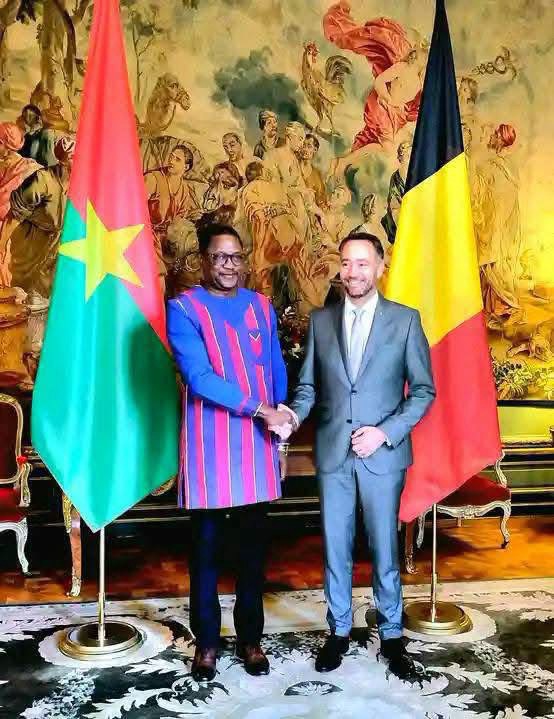
Just weeks after Burkina Faso’s delegation participated in the 2026 Russia-Africa Economic and Humanitarian Forum in Moscow, where grand promises of financial cooperation were touted, the government sent its foreign minister straight to Brussels. Between November 4 and 5, 2026, Karamoko Jean Marie Traoré met with EU High Representative Kaja Kallas and Belgian Deputy Prime Minister and Foreign Minister Maxime Prévot moves that exposed the fragile foundation of Ouagadougou’s proclaimed anti-Western stance.
The timing was no coincidence. Moscow had yet to deliver tangible financial support, despite the signing of a memorandum of understanding between the Confederation of African States’ Investment and Development Bank and Russia’s VEB.RF during the forum. Such agreements, while symbolic, do not immediately translate into hard currency or infrastructure projects the lifeblood of a country grappling with a widening budget deficit and escalating security and social costs.
What Moscow’s promises have and haven’t delivered
The junta’s leadership had positioned Russia as the ultimate replacement for Western aid, claiming Moscow could single-handedly fund Burkina Faso’s development. Yet, over a year into this strategic reorientation, the results remain elusive. No concrete disbursements, no large-scale infrastructure projects, and no clear timeline for financial relief have been announced. This silence speaks volumes in a country where the 2026 budget forecasts a 486.8 billion FCFA deficit (4% of GDP), according to IMF projections numbers that don’t lie about the depth of financial strain.
In contrast, Russia’s role has focused on security cooperation, including the much-discussed deployment of Russian military instructors and the supply of equipment. While these measures address immediate security concerns, they do little to alleviate the broader economic pressures driving Burkina Faso toward international donors once again.
Why financial realities override political posturing
Burkina Faso’s budgetary gap is not a theoretical concern it’s a daily challenge. Revenue projections of 3,431.5 billion FCFA fall short of projected expenditures (3,918.3 billion FCFA), forcing the government to seek external financing regardless of its stated preferences. This is not a sign of weakness but of responsible governance: no nation can sustain development without diverse partnerships, no matter how loudly it denounces its former allies.
Brussels rides to the rescue again
The 40 million euro commitment from Belgium, announced during the Brussels talks and slated for the post-2027 period, underscores a pragmatic truth: Europe remains indispensable. Delivered through Enabel, Belgium’s international cooperation agency, this funding targets long-term development priorities exactly the kind of support Burkina Faso’s leaders once dismissed as unwanted interference.
The minister’s subsequent meetings with European Commission officials and operational bodies like Enabel and Bio Invest signal a return to business as usual. There’s no mistaking the message: despite fiery speeches condemning Western influence, Ouagadougou cannot afford to abandon the very institutions it once vilified.
The cost of double messaging
While maintaining relations with Europe is understandable, the junta’s persistent anti-Western rhetoric creates a glaring disconnect. How can authorities justify telling citizens that Western partners are a threat to sovereignty while simultaneously negotiating multi-million-euro deals with them? The contradiction erodes public trust and raises uncomfortable questions: if Moscow was truly Burkina Faso’s financial savior, where are the dividends? If Europe is still essential, why the relentless hostility in public statements?
Sovereignty, after all, is not measured by the volume of anti-European speeches but by the ability to fund national development, protect citizens, and deliver tangible improvements. Burkina Faso’s leaders must now explain why their actions contradict their words or risk being seen as prioritizing ideology over the welfare of their people.
Looking ahead: partnership or performance?
The path forward demands honesty. Burkina Faso has every right to diversify its alliances and explore new partnerships. But it must do so transparently, without fostering a false narrative of rupture that only serves to confuse domestic and international audiences alike.
The real test of the junta’s diplomacy will not be in the volume of its criticism of the West, but in its ability to secure and deploy real resources whether from Moscow, Brussels, or elsewhere. Until then, the question lingers: what has Russia delivered besides rhetoric, and why must Burkina Faso keep returning to Europe for help?
The answers may well determine the country’s stability and future prosperity.
By Moussa Samuel Coulibaly — Journalist