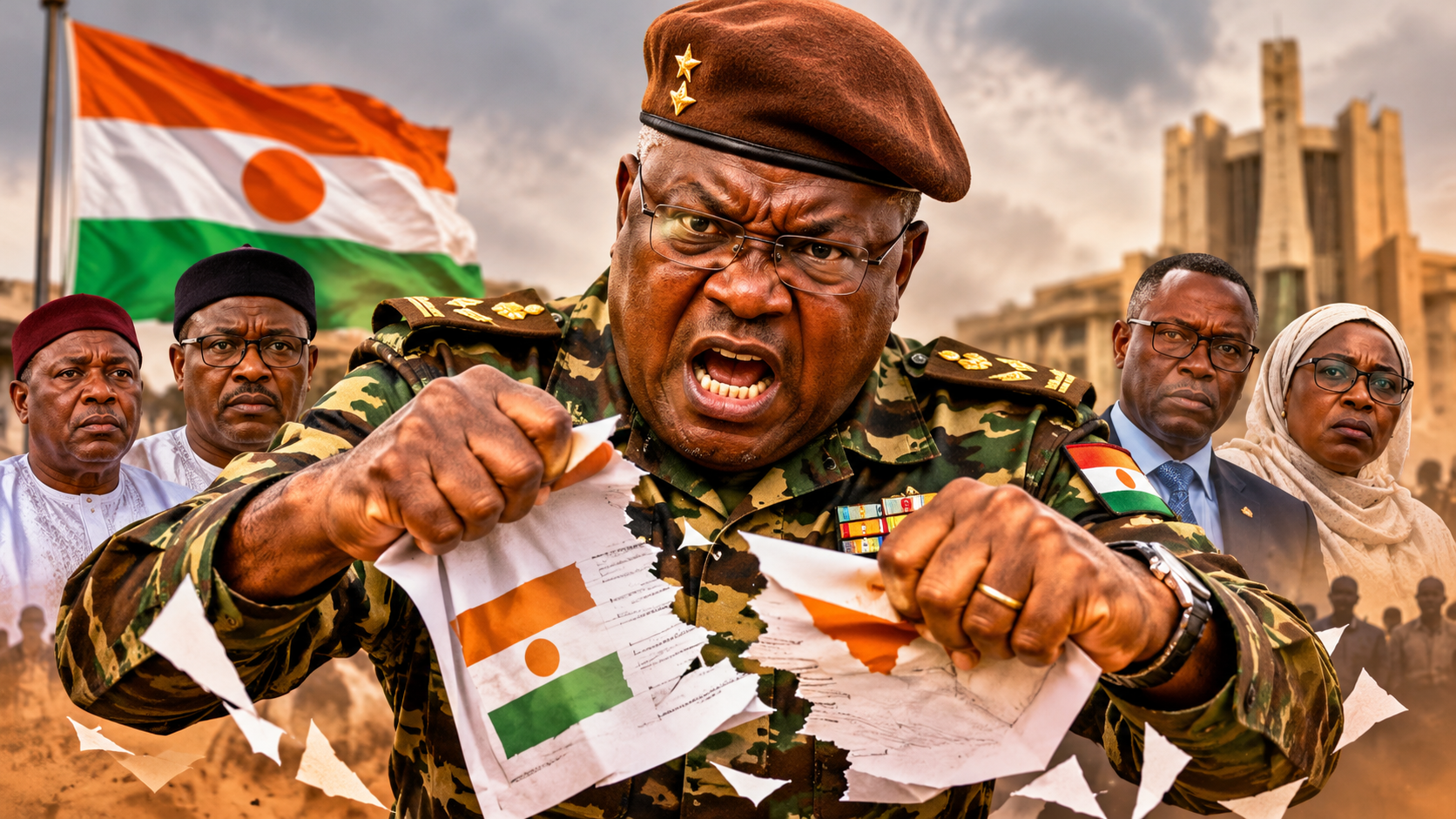

The recent wave of provisional nationality revocations in Niger has thrust a critical question into the spotlight: is the military junta led by General Abdourahamane Tiani genuinely safeguarding national security, or is this a calculated campaign to settle scores with former allies of ousted President Mohamed Bazoum? As the number of affected individuals reaches 25 since October 2024, the policy’s underlying motivations have come under intense scrutiny.
From security measure to political weapon
Since seizing power in July 2023, the Tiani administration has framed nationality revocation as a vital tool to protect Niger’s fundamental interests. However, the systematic targeting of former government officials including high-ranking figures like ex-Prime Minister Ouhoumoudou Mahamadou has cast doubt on these claims. The decree signed on September 17, 2026, stripping five more personalities of their citizenship, further fuels speculation about the measure’s true intent.
The widening net of accountability
The scope of these revocations extends beyond accusations of criminal activity. Many of those affected held significant political roles under Bazoum’s administration, suggesting a deliberate pattern rather than isolated legal proceedings. This raises concerns that nationality revocation is being weaponized to marginalize former regime figures, regardless of concrete evidence of wrongdoing.
The junta’s stated justifications ranging from alleged breaches of public order to collusion with foreign powers demand rigorous examination. Yet the lack of transparent judicial processes leaves room for skepticism. When a state strips citizenship from individuals tied to a predecessor’s government, the line between legitimate security enforcement and political retribution blurs dangerously.
Exile and the erosion of legal safeguards
For those now living abroad, the consequences are particularly severe. A provisional revocation doesn’t just strip legal status; it can paralyze access to consular services, travel documents, and even the right to return. Human rights organizations have warned that these measures risk creating a class of de facto stateless individuals especially when the revoked nationality is the only one held by the affected person.
Administrative limbo and long-term risks
The provisional nature of these revocations offers little reassurance. While not immediately rendering individuals stateless, the uncertainty surrounding their status can disrupt lives for years. Travel restrictions, family separations, and professional disruptions become persistent threats. For political figures in exile, this administrative vulnerability may serve as a subtle but effective form of pressure.
Legal process under scrutiny: where is the balance?
The junta’s legal framework for these revocations, established in 2024, cites threats to national security and public order. However, the broad and often vague nature of these accusations such as electronic defamation or vaguely defined ‘attacks on state security’ raises serious due process concerns. Critics argue that the criteria are so expansive that they could encompass legitimate political dissent.
The presumption of innocence in question
A fundamental principle of justice is that accusations must be proven, not assumed. Yet the revocation process appears to invert this logic, placing the burden of proof on the accused to demonstrate their innocence. Without independent judicial oversight or public disclosure of evidence, the process risks becoming a tool for silencing critics rather than addressing genuine security threats.
Reconciliation or retaliation? The political fallout
The cumulative effect of these revocations is a deepening rift between the military government and former regime figures. Far from fostering national unity, the policy risks entrenching divisions that could undermine long-term stability. When measures targeting former officials appear politically motivated, they undermine public trust in the justice system and complicate efforts to heal national divisions.
The credibility gap
Niger’s ability to navigate these challenges hinges on its commitment to impartial governance. A policy that disproportionately affects individuals based on their political affiliations rather than verifiable offenses risks eroding the very institutions meant to protect citizens. The junta must demonstrate that these revocations are rooted in evidence, not political vendettas, to preserve the integrity of its security narrative.
The human cost behind the policy
Beyond the geopolitical implications, the human toll of these revocations is profound. Families separated by borders face uncertainty, professionals lose access to livelihoods, and individuals risk losing the legal protections of their homeland. The provisional label offers little comfort when the consequences stretch into permanence. For the affected, the question lingers: is this a necessary security measure, or a punitive tool wielded with impunity?
What the future holds
The trajectory of Niger’s nationality revocation policy will reveal whether it serves as a legitimate security framework or a mechanism for political consolidation. For the international community and domestic observers alike, the key test lies in transparency: Are these revocations based on verifiable facts, or do they reflect a deeper, unresolved power struggle? The answer will shape not just the fate of those directly affected, but the nation’s democratic and legal future.
By Idriss MAMADOU — Journalist