Tu-95 crash in Russia’s Far East: six dead as aging bomber fleet faces a turning point
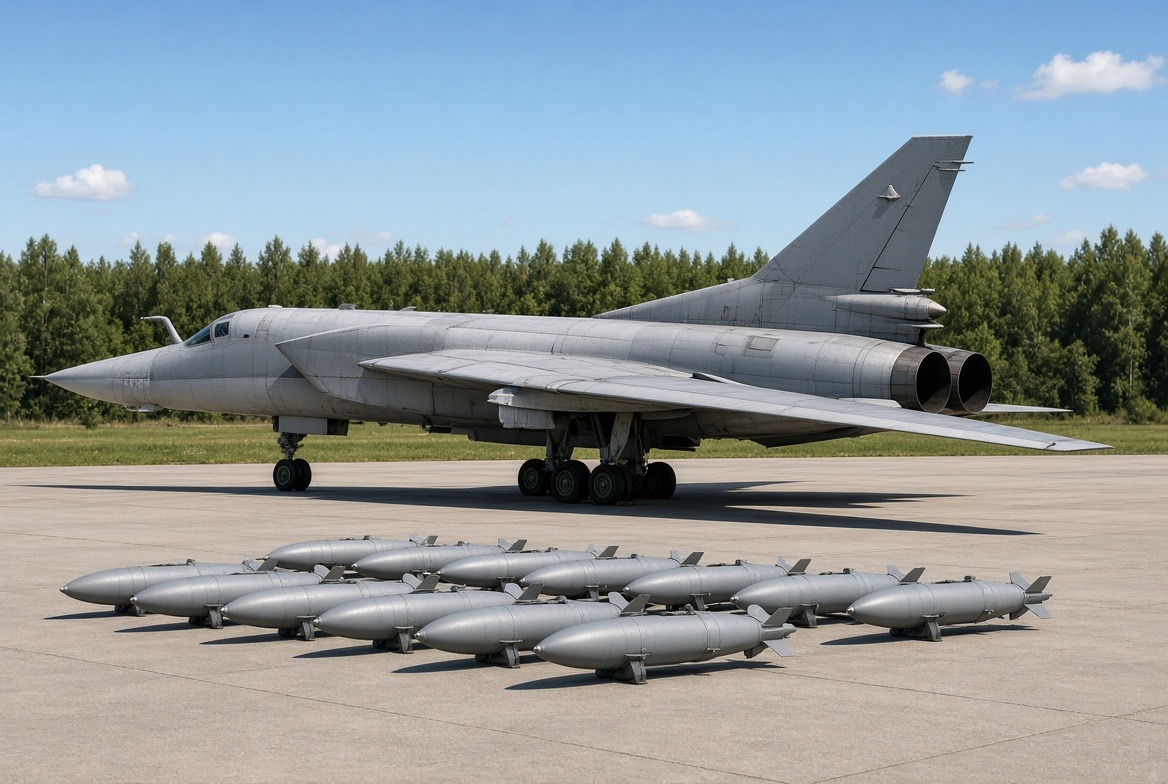
A Russian Tupolev Tu-95MS strategic bomber crashed on Tuesday, September 29, in the Amur region of Russia’s Far East during a training flight, killing six crew members. A seventh service member, the sole survivor according to local media, was hospitalized. The accident marks a pivotal moment for Moscow’s long-range strike strategy, as these aircraft have been central to Russia’s campaign since the war in Ukraine began.
A deadly training flight in the Russian Far East
A plume of smoke, a burning aircraft, and debris scattered on the ground: the crash of a Tu-95 brought mourning to the Amur region in Russia’s extreme east on Tuesday. The Russian Ministry of Defense confirmed that a strategic bomber went down during a training exercise. According to information from Interfax and Reuters, six people died in the accident. Authorities initially did not specify the causes of the crash.
Local media reported that a seventh crew member survived and was taken to a hospital. The aircraft reportedly fell in an uninhabited area, preventing additional casualties on the ground. The exact circumstances of the accident are now to be established by Russian authorities.
An aircraft decades old but still central to Russian air power
The Tu-95 is one of the most recognizable military aircraft in the world. Designed in the Soviet era, this four-engine turboprop bomber first flew in the 1950s. It has been deeply modernized over the decades, particularly in its Tu-95MS version, intended to carry long-range cruise missiles.
The aircraft remains an important element of Russia’s airborne nuclear deterrence. But since the start of the full-scale invasion of Ukraine in February 2022, Tu-95s have primarily become one of the main vectors of Russia’s long-range conventional strikes.
According to the International Institute for Strategic Studies (IISS), the Tu-95MS is notably the primary launch platform for Kh-101 cruise missiles used against targets in Ukraine. These bombers can launch their missiles from Russian airspace, hundreds of kilometers from the battlefield.
This capability allows Moscow to keep its bombers away from Ukrainian air defenses while retaining significant strike capacity.
From the war in Ukraine to long-range strikes
Since 2022, the appearance of Tu-95s in Russian operations has been regularly associated with air raid alerts in Ukraine.
One particularly revealing episode occurred in December 2023. On December 8, the Ukrainian Air Force reported that several Tu-95s had launched Kh-101 and Kh-555 cruise missiles against various regions of the country. According to Ukrainian authorities, 19 missiles were fired and 14 were intercepted. One person was nevertheless killed in the Dnipropetrovsk region.
These operations illustrate the Tu-95’s role in Russia’s air campaign: the bomber is generally not above the target. It serves as a very long-range launch platform, with missiles then continuing their trajectory toward objectives in Ukraine.
Energy infrastructure, military and industrial facilities, and various urban areas have been among the targets of Russian missile campaigns. The IISS emphasizes that Russian forces have used their bombers to launch cruise missiles against military installations, critical infrastructure, and Ukrainian defense industry sites.
A symbol of the air war
Over the course of the conflict, the Tu-95 has become inseparable from major Russian missile salvoes. For Ukrainians, the activity of these aircraft is often an indicator heralding potential strikes and new air raid alerts.
But these bombers have also become priority targets for Ukraine.
This vulnerability appeared spectacularly on June 1, 2025, during the Ukrainian operation code-named “Spider’s Web.” Ukrainian drones attacked several Russian air bases located far from the front, notably Belaya in the Irkutsk region, as well as other facilities housing strategic bombers.
According to Ukrainian officials cited by Reuters, the operation involved 117 drones and targeted four air bases. Tu-95s and Tu-22M3s were among the aircraft targeted. The exact scale of Russian losses, however, has been subject to divergent assessments.
The operation above all demonstrated a new strategic reality: even bombers stationed thousands of kilometers from Ukraine could be exposed to attacks.
Satellite images examined by Reuters notably showed several aircraft destroyed or heavily damaged at the Belaya base. Analysts estimated that this attack could reduce Russian cruise missile launch capabilities, although the precise extent of losses remained uncertain.
An accident far from the front line
The Tuesday crash, however, has an important characteristic: nothing currently allows it to be attributed to Ukrainian action.
The aircraft crashed in the Amur region, thousands of kilometers from the Ukrainian front, during a flight presented by the Russian Ministry of Defense as a training exercise. Initial available information does not mention an attack, and no Ukrainian claim of responsibility has been reported.
Hypotheses are already circulating on social media regarding a possible technical failure, but they do not constitute established conclusions at this stage. Russian authorities have not yet publicly communicated the cause of the accident.
The crash site nevertheless holds particular importance for Russian strategic aviation. The Amur region hosts the Ukrainka air base, traditionally associated with the operation of Russian strategic bombers. Reuters had already indicated in 2025 that some bombers had been redeployed to bases in eastern Russia in the context of the war.
An old aircraft, but still strategic
The Tu-95 belongs to a generation of aircraft designed during the Cold War. Yet its longevity reflects the importance Moscow places on this platform. Modernized, equipped with modern cruise missiles, and capable of operating over very long distances, it retains a major military function.
The Amur accident, however, recalls the constraints linked to operating an aging and heavily used fleet. Since 2022, Russian strategic bombers have been regularly used for combat and training missions, while several aircraft have been destroyed or damaged during the war.
On Tuesday, the Tu-95 that crashed was not engaged in a strike against Ukraine. It was conducting a training flight. But its recent history is intimately linked to the conflict: for more than four years, this type of aircraft has been used to launch missiles against Ukraine, while itself becoming one of the targets sought by Ukrainian forces.
The Russian investigation must now determine what happened in the final minutes of the flight. For the families of the killed service members, the toll is already final: six crew members lost their lives, while a seventh is hospitalized.
Beyond the human tragedy, the loss of a Tu-95 also constitutes a significant event for Russian strategic aviation. In a war where the depth of territory no longer fully guarantees the security of air bases, each aircraft of this category represents a military capability that is difficult and time-consuming to replace.