
The Pacific Theater is experiencing a surge in geopolitical tension as unprecedented naval movements converge with high-stakes aerial surveillance. Recent maneuvers by Beijing have reshaped the power dynamics in the Taiwan Strait, while a discreet but highly specialized US aircraft has added another layer of complexity to the already volatile situation.
China’s calculated naval display: what’s driving the massive fleet deployment
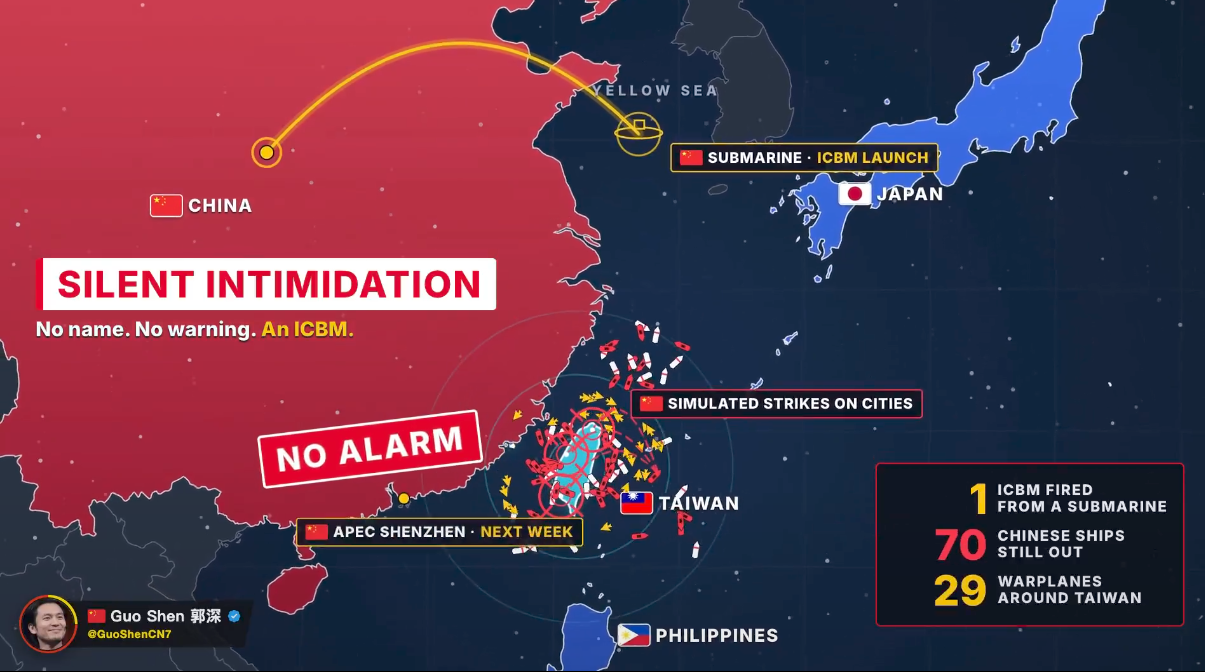
In early November 2026, a coordinated naval operation of unparalleled scale unfolded in the western Pacific. Taiwanese security officials confirmed that over 100 Chinese warships—including coast guard vessels—were deployed simultaneously in waters surrounding Taiwan. This was not a routine exercise.
The operation, conducted without prior official announcement, spanned far beyond the Taiwan Strait. Ships from all three of China’s regional commands—Northern, Eastern, and Southern Fleets—participated, suggesting a high level of inter-service integration. Reports indicated that live-fire drills and simulated attacks on both military targets and urban centers were part of the maneuvers.
By mid-November, approximately 70 vessels remained active in the First Island Chain—a strategic arc stretching from Japan through Taiwan and the Philippines. Military analysts suggest this deployment may be a rehearsal for maritime blockade scenarios, designed to test China’s ability to isolate Taiwan in a future crisis.
Such an approach could sever Taiwan’s sea and air links, disrupt supply chains, and complicate any foreign military response—without the immediate escalation of a full-scale invasion.
The unbearable pressure: how Beijing is testing the limits of deterrence
For Taipei, the timing and scale of these movements are far from coincidental. They reflect a deliberate strategy to probe the resilience of regional alliances and the preparedness of foreign powers to intervene. The drills appear calibrated not only to intimidate but also to validate operational concepts for a potential blockade.
The Institute for the Study of War highlighted in its November assessment that these exercises align with long-standing Chinese military doctrine aimed at area denial and anti-access strategies. The goal is clear: to make any intervention in support of Taiwan prohibitively costly for external actors like the United States and Japan.
The proximity of these activities to critical shipping lanes—especially those used for semiconductor and energy transport—adds a global dimension to the stakes. A prolonged disruption could ripple through supply chains, impacting industries worldwide.
Nuclear surveillance over the Taiwan Strait: decoding the WC-135R mission
On November 15, a rarely seen US Air Force aircraft made an appearance that raised eyebrows across intelligence communities. A WC-135R Constant Phoenix—dubbed the “Nuclear Sniffer”—was observed taking off from Okinawa, Japan, before flying a trajectory south of Taiwan and into the southwestern approaches of the Taiwan Strait.
Equipped with advanced atmospheric sampling instruments, this aircraft is designed to detect trace amounts of radioactive particles. While its primary mission involves monitoring nuclear test sites and radiological events, its presence in this tense environment is impossible to ignore.
There is no official confirmation linking this flight to China’s naval exercises. However, the timing is striking. The WC-135R’s capabilities suggest it was monitoring airspace for unusual radiation signatures—possibly as a response to concerns over nuclear preparedness or even the detection of clandestine activities.
Could this be about radiation—or something more?
Military experts caution against jumping to conclusions. The aircraft may have been on a routine atmospheric surveillance mission, unrelated to the Chinese maneuvers. Alternatively, it could be part of a broader intelligence-gathering effort to assess Beijing’s nuclear posture, especially given recent reports of expanded Chinese nuclear facilities.
Another plausible explanation: the US is leveraging every sensor at its disposal to maintain real-time situational awareness in a region where miscalculation could trigger a crisis with global consequences.
Behind the scenes: what’s really at stake for Washington and Beijing
The convergence of China’s naval surge and the US nuclear-sniffing flight is not accidental. It reflects a deeper strategic calculation on both sides.
For Beijing, the drills serve as a clear signal: Taiwan remains a non-negotiable priority, and any attempt to alter the status quo will be met with military resistance. The inclusion of all three fleet commands underscores the meticulous planning behind the operation—one designed to demonstrate operational readiness across multiple domains.
For Washington, the deployment of the WC-135R suggests a heightened focus on early warning and deterrence. The aircraft’s base at Kadena Air Base in Okinawa positions it perfectly to monitor not only Chinese nuclear developments but also the electromagnetic and atmospheric signatures of large-scale military movements.
The question on every strategist’s mind: Is this a prelude to further escalation—or simply a moment of calculated brinkmanship in a long-standing rivalry?
Global implications: why the Taiwan Strait remains the world’s most dangerous flashpoint
The Taiwan Strait is more than a regional conflict zone—it is a global pressure point. Over 60% of the world’s semiconductors are manufactured in or transited through Taiwanese facilities. A military blockade or conflict could trigger cascading disruptions in electronics, automotive, and defense industries.
Moreover, the presence of US and allied reconnaissance platforms in the area underscores the broader geopolitical stakes. Any misjudgment or unintended confrontation could quickly escalate into a full-blown international crisis.
While neither side appears ready to back down, both are acutely aware of the risks. The current standoff is less about immediate war and more about deterrence, signaling, and the quiet struggle for control over one of the most strategically vital regions on Earth.