
As droughts intensify, floods disrupt harvests, and rainfall patterns grow increasingly unpredictable, Benin is rethinking its strategy to safeguard rural livelihoods. The nation’s latest initiative, launched in Sèmè-Podji, doesn’t just throw money at the problem—it digs into the root causes shaping climate vulnerability across nine at-risk communes. Behind this ambitious project lies a calculated response to systemic agricultural fragility, water scarcity, and economic stagnation in regions where communities have long struggled to adapt.
Why these nine communes were selected
Not all climate threats in Benin are created equal. The government’s integrated resilience project zeroes in on areas where environmental pressures intersect with economic fragility. Three criteria guided the selection: exposure to extreme weather, reliance on rain-fed agriculture, and the prevalence of degraded land. The communes—Sèmè-Kpodji, Sakété, Kétou, Savalou, Dassa-Zoumè, Djougou, Copargo, Ouaké, and Malanville—were chosen because their populations face the highest risks of crop failure, water shortages, and income loss.
For these communities, the stakes are high. Household incomes hinge on unpredictable harvests, land degradation limits agricultural productivity, and limited access to water forces farmers into a cycle of subsistence rather than growth. The project aims to break that cycle by addressing the structural weaknesses that leave these areas vulnerable.
The hidden costs of climate instability
Behind the headlines of failed harvests lies a deeper story of lost potential. In recent years, erratic rainfall has repeatedly damaged maize and groundnut fields, leaving farmers with little recourse beyond emergency aid. These disruptions aren’t isolated incidents; they’re symptoms of a broader agricultural system ill-equipped to handle modern climate volatility.
The project’s architects argue that temporary fixes—like food aid or one-time subsidies—won’t suffice. Instead, they’re banking on a multi-pronged approach that rethinks everything from water management to digital tools, ensuring communities aren’t just surviving climate shocks but thriving despite them.
Water security as the backbone of resilience
Agriculture in Benin’s vulnerable zones is trapped in a catch-22: rely on seasonal rains or face collapse. The PIRRCF aims to rewrite that narrative by securing water access through a mix of infrastructure and technology. Planned interventions include:
- Three new water reservoirs to store seasonal runoff
- Two valley floor rehabilitations to restore natural water retention
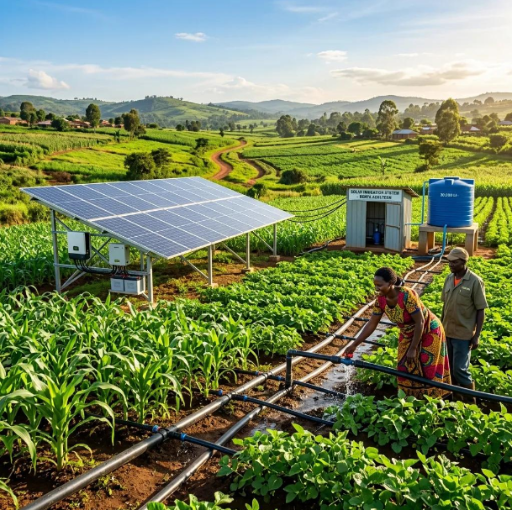
- Five drip irrigation systems to maximize water use efficiency
- Twelve pastoral boreholes to support livestock herders
But water isn’t the only resource in short supply. Energy poverty exacerbates these challenges, forcing farmers to rely on expensive, polluting diesel generators for irrigation. The project tackles this by integrating solar-powered pumping systems, reducing both costs and carbon footprints.
Digital farming: a tool for adaptation
Information gaps are another silent killer of rural resilience. Without real-time data on weather patterns, soil health, or market prices, farmers make decisions in the dark. The PIRRCF introduces digital solutions to bridge these gaps, offering tools like:
- Mobile platforms for climate-smart advisory services
- Digital soil testing kits for precision agriculture
- Market access apps to connect producers with buyers
These innovations aren’t just about convenience—they’re about giving farmers the power to anticipate risks and capitalize on opportunities before problems escalate.
Building resilience beyond the fields
The project’s vision extends beyond agriculture. Recognizing that economic diversification is key to long-term survival, it incorporates local material valorization as a cornerstone of its strategy. Traditional construction methods—like compressed earth bricks and stabilized earth blocks—offer a sustainable alternative to imported materials, reducing costs and environmental impact while creating jobs.
For artisans, small contractors, and women-led enterprises, this shift represents a chance to participate in a green economy. The Swiss cooperation highlights this aspect as a dual win: reinforcing local industries while cutting carbon emissions tied to construction.
Measuring success: numbers that matter
The project’s ambitions are backed by hard targets. By 2031, it aims to:
- Train and support 20,000 people in climate adaptation strategies
- Boost agricultural productivity by 20% in target areas
- Increase incomes for 10,000 households by 30%
- Create 5,000 direct jobs and 15,000 indirect roles in agriculture, energy, and digital sectors
With over 31,000 direct beneficiaries—including more than 12,000 women—the ripple effects could touch 1.5 million people in surrounding communities. But numbers alone won’t define success. The real test will be whether these interventions translate into tangible improvements in food security, income stability, and climate readiness.
The execution challenge: turning plans into progress
Funding is only half the battle. The PIRRCF’s $15.5 million budget, contributed by the UN Development Programme (UNDP), Switzerland, Belgium, and Benin’s government, must translate into effective action. Success hinges on three critical factors:
- Infrastructure delivery: Ensuring projects are completed on time and distributed equitably across communes
- Local ownership: Engaging communities in planning, maintenance, and decision-making
- Transparency: Clear accountability in fund allocation and project management
Without these pillars, even the most well-funded initiatives risk failing to achieve their goals. Local authorities and beneficiary groups will play a pivotal role in monitoring progress and ensuring that equipment and training don’t become unused relics of good intentions.
What’s at stake for Benin’s rural future
The PIRRCF isn’t just another climate project—it’s a litmus test for Benin’s ability to future-proof its rural economy. For farmers in Sèmè-Kpodji, herders in Malanville, or women brickmakers in Djougou, the stakes couldn’t be clearer: secure water, stable incomes, and the tools to adapt to an unpredictable climate.
As the project rolls out, the true measure of its impact won’t be the number of infrastructures built or the workshops held. It will be the lives transformed—the households no longer dependent on emergency aid, the communities that can pivot from survival to sustainability. The next five years will reveal whether Benin’s investment in resilience pays off, not just in theory, but on the ground.