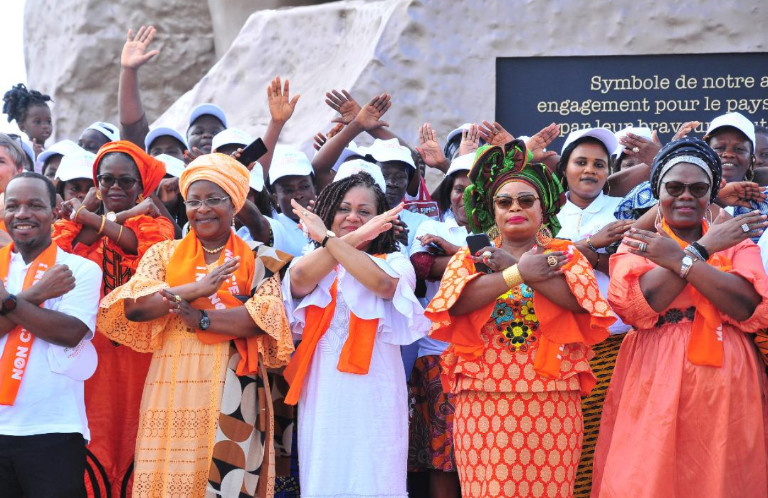

When Romuald Wadagni, Benin’s Prime Minister and head of government, convened the Council of Ministers on November 4, 2026, the agenda carried more than routine policy discussions—it signalled a fundamental recalibration in the nation’s approach to gender-based violence. The cabinet’s decision to submit the African Union Convention on the Elimination of Violence against Women and Girls to parliament for ratification wasn’t merely a procedural move; it laid bare the structural tensions between legal progress and entrenched social norms that the country has long struggled to reconcile.
Why ratification matters: more than a signature on paper
The Convention, adopted in Addis Ababa in February 2025, represents a binding continental framework designed to tackle violence in all its forms—physical, sexual, psychological, economic, and digital. For Benin, ratification would not only align the country with regional commitments but force a confrontation with the realities of violence that persist behind closed doors, in workplaces, and across digital platforms where impunity often thrives. It exposes the gap between policy ambition and on-the-ground enforcement, revealing how deeply rooted cultural attitudes continue to undermine legal protections.
The unseen battlegrounds of gender violence
While physical assaults and sexual violence frequently dominate public discourse, the Convention broadens the scope to include less visible but equally damaging forms of abuse. Psychological manipulation, economic coercion, and digital harassment—where women are stalked online, threatened, or publicly shamed—are now formally recognised. This expansion forces Benin to reckon with the fact that its current legal and institutional responses are ill-equipped to address these modern manifestations of violence, particularly when they occur beyond traditional community oversight.
The Convention dismantles one persistent myth: that violence can be justified by tradition, culture, or religion. Its ratification would compel Benin to confront the uncomfortable truth that many harmful practices—from forced marriages to workplace discrimination—are often framed as cultural norms rather than human rights violations. The legal text leaves no room for ambiguity: dignity and equality must prevail over any claim to custom or heritage.
From policy to practice: the implementation paradox
History shows that legal frameworks alone rarely translate into tangible protection. Benin’s move to ratify the Convention must be scrutinised not just for what it promises in theory, but for how the government intends to bridge the implementation gap. Key questions loom: How will law enforcement handle cases of digital violence when many perpetrators operate anonymously? What support systems will be created for survivors navigating psychological trauma? And crucially, how will men and boys—often the primary perpetrators—be engaged in dismantling the very systems that uphold gender inequality?
The Convention places shared responsibility at its core. Prevention is no longer the sole domain of women’s rights advocates or government agencies; it demands collective action. This compels Benin to rethink its social mobilisation strategies, moving beyond awareness campaigns to actively reshape masculine norms and encourage men to become allies in change. Yet, such shifts require more than political will—they necessitate sustained funding, grassroots engagement, and a willingness to challenge deeply embedded beliefs.
The political timeline: urgency meets realism
The Council of Ministers’ decision to advance the ratification process arrives at a pivotal moment. With the International Day for the Elimination of Violence against Women on November 25 marking the start of 16 Days of Activism against Gender-Based Violence, Benin’s move carries symbolic weight. But symbols alone won’t end impunity. The real test lies in parliament’s deliberations and the government’s follow-through. Will lawmakers prioritise this ratification, or will political pragmatism delay progress? More importantly, will Benin’s legal system be fortified to enforce the Convention’s provisions, or will it remain a paper tiger?
Véronique Tognifodé, Minister of Family and Social Action, underscores the dual nature of this challenge. While ratification is a critical step, she stresses that lasting change hinges on behavioural transformation. ‘This is not just about ticking a box in Geneva or Addis Ababa,’ she notes. ‘It’s about ensuring that every woman and girl in Benin—whether she lives in Cotonou, Parakou, or a rural village—can walk the streets, work, or scroll online without fear.’
What comes next: a litmus test for Benin’s commitment
The road ahead demands more than parliamentary approval. Benin must develop robust mechanisms for victim support, invest in training for judges and law enforcement, and launch nationwide campaigns to reshape societal attitudes. The Convention’s true legacy will be measured not by the number of signatures collected, but by the number of lives transformed.
As the government prepares to navigate this complex terrain, one thing is clear: the fight against gender-based violence in Benin is entering a decisive phase. The choice is no longer whether to act, but how swiftly and effectively Benin can turn legal promises into lived realities—where no tradition, convenience, or indifference stands in the way of justice.