
Behind the scenes of Burkina Faso’s €40 million deal with Belgium
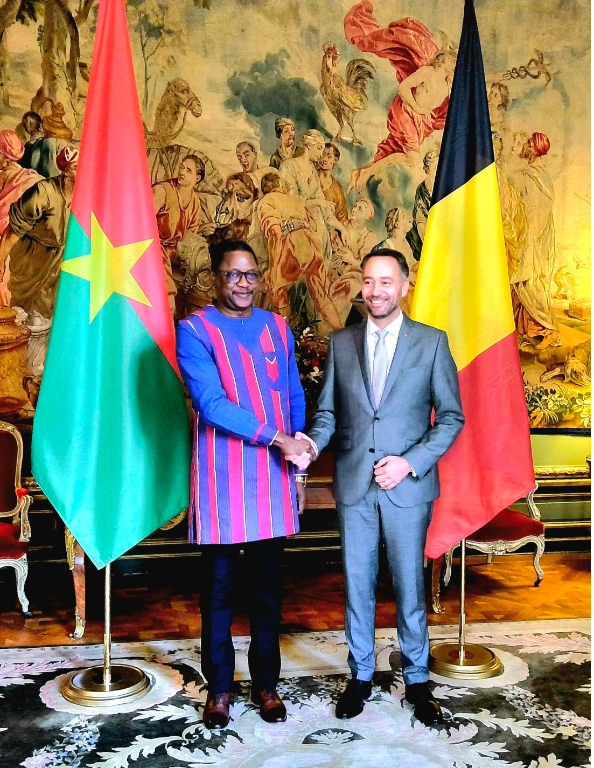
The recent visit of Burkina Faso’s foreign minister, Karamoko Jean-Marie Traoré, to Brussels in early November 2026 wasn’t just another diplomatic rendez-vous—it revealed deeper dynamics at play. Against a backdrop of rising tensions with Western allies, Ouagadougou secured a renewed Belgian commitment of €40 million in development aid for the post-2027 period. But why would a government that champions sovereign independence and shifting alliances keep engaging with Brussels?
The answer lies in the calculated balance between political posturing and pragmatic cooperation. While Ibrahim Traoré’s administration distances itself from former Western partners, the €40 million pledge from Belgium signals that economic pragmatism still outweighs ideological ruptures.
Why Belgium’s €40 million aid matters for Burkina Faso
The renewal of Belgium’s financial pledges—through the Belgian Development Agency, Enabel—directly continues a cooperation program that had already allocated €34.5 million for 2023–2027. Though the €40 million is earmarked for post-2027, its announcement serves as a lifeline for a nation grappling with economic instability, social unrest, and escalating security threats.
The aid is not an immediate cash injection but a structured commitment to support development projects aimed at improving living conditions and fostering sustainable growth. For Ouagadougou, the funds represent a critical external resource in a climate where traditional donors are increasingly cautious. For Brussels, it underscores a strategic decision to maintain influence in a Sahelian partner facing growing pressure from geopolitical realignments.
How the aid aligns with Burkina Faso’s shifting alliances
The €40 million deal follows a broader pattern: Burkina Faso’s leadership, while publicly embracing anti-Western rhetoric, continues to pursue selective cooperation with European institutions. This approach suggests a nuanced strategy—one that combines anti-colonial discourse with the necessity of international partnerships.
The government’s pivot toward partnerships with non-Western actors like Russia doesn’t eliminate the value of Western aid. Instead, it reflects a dual-track diplomacy: asserting sovereignty on one hand while securing economic support on the other.
Diplomatic meetings that reveal more than just money
Traoré’s Brussels visit wasn’t confined to financial negotiations. On November 4, he met with Kaja Kallas, EU High Representative for Foreign Affairs and Security Policy, to discuss Burkina Faso’s evolving partnerships and its vision for international collaboration. The next day, discussions with Belgian counterpart Maxime Prévot focused on bilateral cooperation, regional dynamics, and future collaboration frameworks.
These engagements highlight a persistent reality: despite public disagreements with Western powers, Ouagadougou keeps diplomatic channels open. The €40 million pledge is not a sign of unconditional surrender to Western influence—it’s a pragmatic acknowledgment that economic realities often precede ideological purity.
What Ibrahim Traoré’s diplomatic strategy reveals
Since coming to power in 2022, President Traoré has positioned sovereignty at the core of his political identity. The expulsion of French forces, criticism of Western policies, and alignment with Moscow have reshaped Burkina Faso’s international posture. Yet the Belgian aid renewal exposes a paradox: how can a government that claims to reject Western influence still accept its development support?The answer lies in the distinction between political rupture and diplomatic disengagement. Burkina Faso may critique Brussels’ past policies, but it still values concrete economic cooperation. Similarly, Belgium may overlook political tensions to preserve its strategic presence in the Sahel.
This delicate balance underscores a broader trend in African diplomacy: nations are asserting independence by diversifying partners, not by completely severing ties with old ones. For Traoré, the €40 million is both a resource and a message—one that says Burkina Faso can negotiate on its own terms, even when those terms include pragmatic compromise.
What’s next: cooperation or continued tension?
The €40 million aid announcement doesn’t signal a full return to Western alignment. But it does indicate that Ouagadougou and Brussels recognize the value of maintaining dialogue. Real rapprochement would require deeper actions: new agreements, reinstated projects, and tangible outcomes from past promises.
Until then, the aid remains a testament to the uneasy coexistence of sovereignty-driven rhetoric and economic necessity. Burkina Faso navigates a complex international landscape—one where partnerships are no longer dictated by ideology alone, but shaped by survival, strategy, and the relentless pursuit of balance.