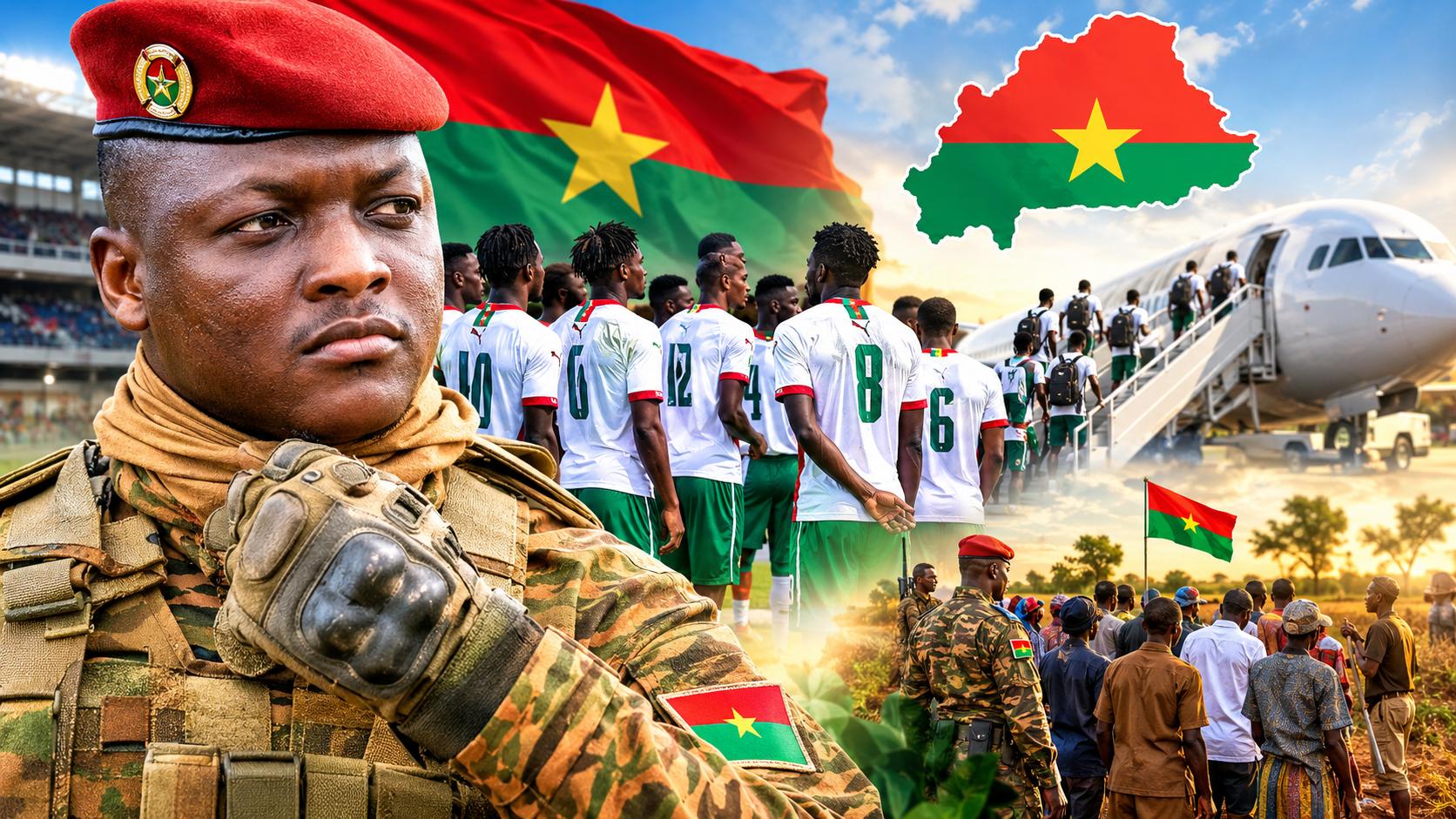

The abrupt absence of Burkina Faso’s senior national football team from the Argentina tournament has sparked widespread debate. Insider reports indicate that the entire squad may have been requisitioned by Captain Ibrahim Traoré for what has been framed as a ‘patriotic engagement initiative.’ This unprecedented development raises critical questions about national priorities and the evolving role of sport within the country’s broader mobilization efforts.
From the pitch to national service: a dramatic shift in priorities
While football was once a unifying symbol of national pride for Burkina Faso, recent indications suggest that even high-profile athletes are now being called upon to serve in non-sporting capacities. If verified, this would mark a historic departure from established practices, placing the country’s sporting ambitions at odds with its immediate national security imperatives.
Sources close to the situation describe the players’ involvement in activities presented as essential to the nation’s collective effort. Though these accounts have not been officially corroborated, they offer a compelling explanation for the team’s unexplained absence from international competition. Such an approach, if confirmed, would represent a fundamental realignment of how Burkina Faso mobilizes its most visible national assets.
Patriotic mobilization in a time of transition
The incident unfolds against a backdrop of intensified national mobilization, where sectors traditionally dedicated to development, culture, and sport are increasingly being repurposed for perceived security needs. Authorities have defended these measures as necessary responses to regional instability, but the implications for non-traditional domains remain underexplored.
Some observers question whether this expansion of patriotic duty risks overshadowing other critical national priorities. The apparent integration of the national football team into broader mobilization efforts has intensified scrutiny over how these decisions are being made and justified.
The need for clarity in a time of shifting expectations
At present, the available information relies solely on insider accounts and lacks independent verification. An official statement from Burkina Faso’s football federation, the Ministry of Sports, or relevant authorities would be essential to determine whether this represents an isolated policy decision or part of a more systematic approach to resource allocation.
Should the reports prove accurate, fundamental questions would persist: Is Burkina Faso systematically redirecting its human and institutional resources toward immediate security imperatives, even at the expense of long-standing national symbols? And what does this mean for the future of football in a nation where the sport has long served as both entertainment and unifying force?