
Roots of influence: traditional authority in Bénin
In Bénin, traditional leaders stand as pillars of cultural heritage, deeply woven into the fabric of local communities. Their roles extend beyond symbolic representation, encompassing conflict resolution and social cohesion. The state formally acknowledges these responsibilities through the 2025 legal framework for traditional chieftaincy, which categorizes and legally recognizes 16 kingdoms and 90 traditional chiefdoms, reinforcing their socio-economic contributions and cultural preservation efforts.
From moral guardians to political players
Despite their cultural significance, traditional leaders often find themselves entangled in political maneuvering. Political parties frequently seek their endorsement to sway voter decisions, sometimes offering material or financial incentives in return. To curb such practices, Bénin has enacted laws prohibiting traditional rulers from participating in partisan politics, aiming to preserve their moral authority.
Public perception: trust meets scrutiny
A recent survey reveals a nuanced picture of citizen attitudes toward traditional leaders. Nearly a quarter of Bénin’s population reported interacting with these leaders in the past year, with a majority expressing confidence in their ability to influence local governance. Yet, this trust is increasingly tempered by concerns over integrity. Three-quarters of respondents suspect at least some traditional leaders of involvement in corruption—a perception that has grown since 2022 and contributed to a decline in overall confidence compared to 2020.
Balancing tradition and neutrality
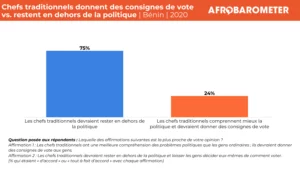
While citizens value the role of traditional leaders in governance, there is a clear preference for their political neutrality. The majority believe these leaders should refrain from partisan activities, allowing voters to make independent choices. This sentiment underscores a delicate balance: honoring tradition while safeguarding democratic principles.